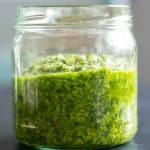
Fresh Wild Garlic Pesto Recipe
Servings: 4 people
Calories: 406kcal
Wild garlic leaves, parmesan cheese, walnuts ( instead of traditional pine nuts), extra virgin olive oil, lemon juice, and sea salt combine to make a fresh wild garlic pesto that’s ready within minutes. It’s a delicious alternative to basil pesto, has a mild garlic flavor, and is perfect for a quick pasta dish or to dress up roast veggies and more!
Print Recipe
Equipment
- Food processor Or pestle and mortar
Ingredients
- 1 Small bunch Wild garlic leaves Include the stems and the flowers – or save them for garnishing.
- ½ Cup Walnuts - You can also use pine nuts, cashew nuts, sunflower seeds or pumpkin seeds.
- ⅓ Cup Grated parmesan cheese
- ½ Cup Extra virgin olive oil
- 4 Tbsp Fresh lemon juice
- ¼ Teaspoon Sea salt
Optional
- Freshly ground black pepper
Instructions
- Sort through the wild garlic and remove debris, leaves, or roots from the bunch. Wash the leaves in cold water, and pat dry using a clean tea towel or a few layers of paper towels. Add them to a food processor with the walnuts, Parmesan, lemon juice, sea salt, and black pepper if using.
- Pulse the ingredients until they are finely chopped. Then slowly add the extra-virgin olive oil in a steady stream until the mixture is smooth.
- Taste and adjust the seasoning as needed. You may need to add a little extra olive oil until you reach the desired consistency.
- If using a pestle and mortar, grind small amounts of wild garlic and nuts at a time until it becomes a rough paste. Add the mixture to a bowl together with the salt and slowly drizzle the olive oil into the bowl, mixing thoroughly until the oil combines with the paste.
Notes
Serving suggestions:
The classic way to serve pesto is with freshly cooked pasta to make a quick and delicious mid-week meal! Also tastes great tossed through roasted vegetables after roasting and added to potato salad. Variations:
Try alternatives like cashew nuts, sunflower seeds, walnuts, pumpkin seeds, toasted hazelnuts, or even hemp seeds. Or use a combination to make new and delicious pesto flavors. Storage:
Store in an airtight jar in the refrigerator and consume within 4-5 days. The oil in the pesto can create an anaerobic environment that’s conducive to the growth of botulism-causing bacteria, so use it within the recommended time frame or freeze it down. To freeze:
Use a wide-mouthed lidded container like a clean jar, for example. (Be sure to leave room at the top of the container for the pesto to expand when frozen.) You can also use ice cube trays to form smaller portion sizes, which can then be transferred to a freezer bag or a ziplock when frozen. Frozen pesto can be stored for up to 3 months. Thaw in the refrigerator overnight and stir well to combine any oil that has separated.
The classic way to serve pesto is with freshly cooked pasta to make a quick and delicious mid-week meal! Also tastes great tossed through roasted vegetables after roasting and added to potato salad. Variations:
Try alternatives like cashew nuts, sunflower seeds, walnuts, pumpkin seeds, toasted hazelnuts, or even hemp seeds. Or use a combination to make new and delicious pesto flavors. Storage:
Store in an airtight jar in the refrigerator and consume within 4-5 days. The oil in the pesto can create an anaerobic environment that’s conducive to the growth of botulism-causing bacteria, so use it within the recommended time frame or freeze it down. To freeze:
Use a wide-mouthed lidded container like a clean jar, for example. (Be sure to leave room at the top of the container for the pesto to expand when frozen.) You can also use ice cube trays to form smaller portion sizes, which can then be transferred to a freezer bag or a ziplock when frozen. Frozen pesto can be stored for up to 3 months. Thaw in the refrigerator overnight and stir well to combine any oil that has separated.
Nutrition
Calories: 406kcal | Carbohydrates: 8g | Protein: 5g | Fat: 41g | Saturated Fat: 6g | Polyunsaturated Fat: 9g | Monounsaturated Fat: 23g | Cholesterol: 7mg | Sodium: 292mg | Potassium: 124mg | Fiber: 1g | Sugar: 2g | Vitamin A: 558IU | Vitamin C: 6mg | Calcium: 94mg | Iron: 2mg
Please note:
This nutritional information is an estimate and values may vary. It is for guidance only and should not be considered dietary advice.
