

How To Grow Wildflowers In Pots And Containers – Easy Guide
Want to add a touch of wilderness to your kitchen garden, patio, or balcony? Then this guide is for you! Wildflowers add a splash of color and are a fun way to support local pollinators!
The best time to start planning is early spring. All you need is a pot with drainage holes, some sandy soil, native wildflower seeds, a sunny spot, and a little TLC. I’ll share my best tips below!

Be sure to check out my post on How To Grow Pea Shoots All Year Round and this simple Pea Shoot Soup With Cream!
Why wildflowers make a difference

In recent years, we have become increasingly aware of the importance of native wildflowers for pollinator health. Bees and other beneficial insects depend on the availability of a diverse range of native plants for their survival.
Native wildflowers provide essential food and habitat for bees, butterflies, moths, and other pollinators, which are critical in pollinating crops (even in your own kitchen garden!) and maintaining biodiversity.
Planting a pollinator pot of wildflowers that bloom at different times throughout the growing season ensures a consistent food source for these hard workers!


Wildflower Meadows
When we started our veggie garden, we planted a wildflower garden as a border. But we needed to remove the grass there, which was a heavy job!
The same applies if you want to plant larger areas or whole beds for a wildflower meadow.
Planting wildflowers in pots and containers is much less work and a great way to add a splash of color to a small space.
Choosing a container
The most important step is to ensure that your pot has good drainage! You will need a pot with drainage holes or to create holes in the bottom of the container using a power drill or hammer and nail. Below are some of the pros and cons to consider when choosing a container.
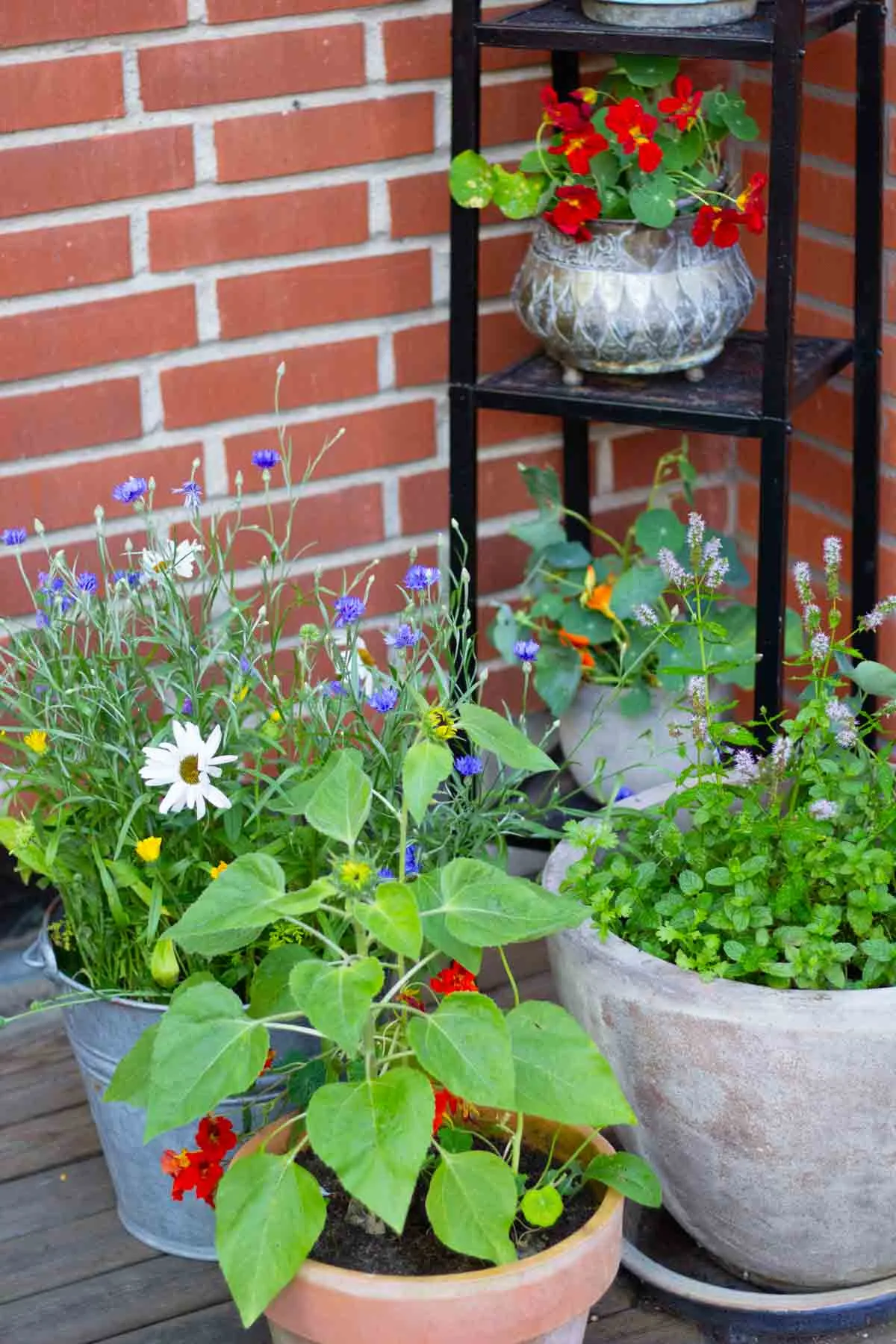

- Terracotta pots are beautiful and offer good drainage, but they may need winter protection.
- Small containers like window boxes are usually not deep enough for taller wildflower mixes. Perennial species like Red Clover and Creeping Nasturtium do well in this type of pot, which only needs a little compost. However, the smaller the container, the more often it will need to be watered.
- Buckets and plastic pots are a cheap and easy alternative. The zinc bucket I’m using in this post was bought at a thrift store and already had holes!
- Large pots and containers need more potting soil or debris to fill the container. Plastic drinking troughs are reasonably priced and come in different shapes and sizes. They’re surprisingly beautiful when the flowers are in full bloom. They can also be used to section off areas of the garden or patio.
Smaller wildflowers are usually around 20-30cm, and taller plants are about 50-80cm. The seed packet you choose should indicate the height of the mature plant. Choosing your pot and planning ahead will also help you determine how much seed you will need to buy.
Choosing wildflower seeds


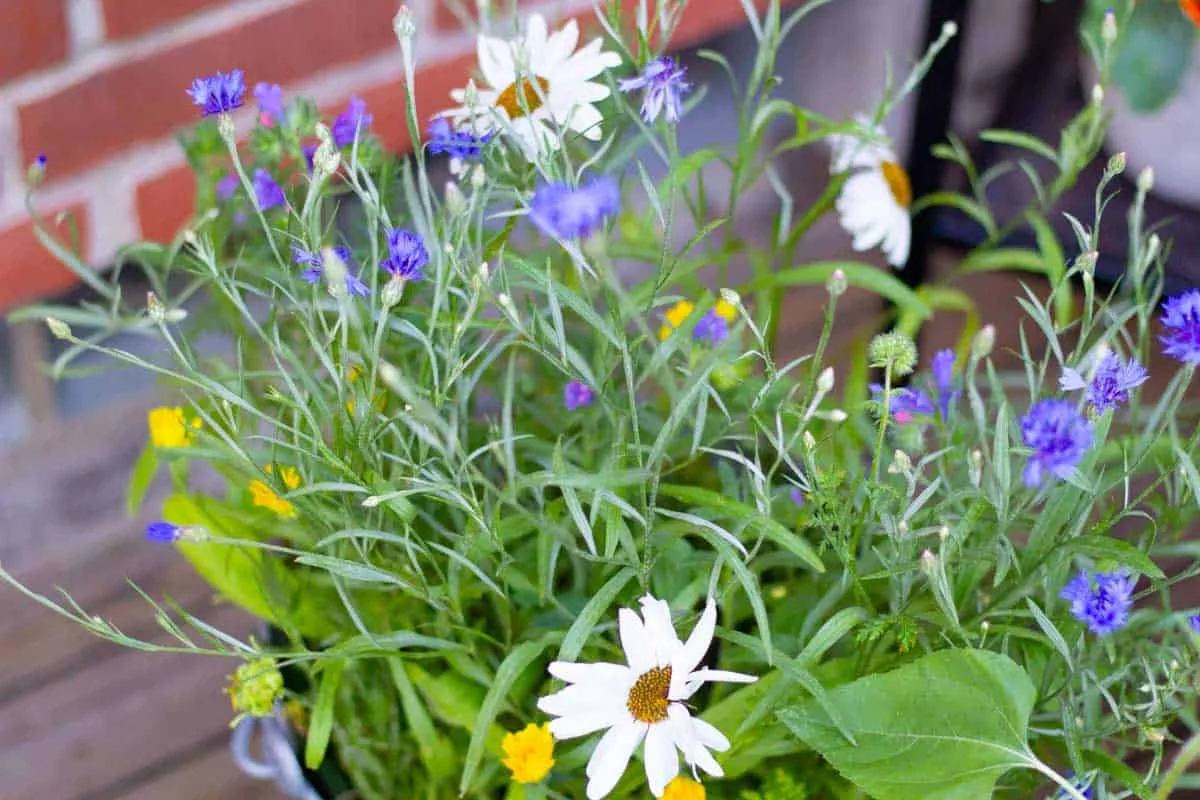
For best results choose high-quality seeds that are naturally produced and native to your area.
The best wildflowers for your garden are native wildflowers! Native species vary greatly depending on where in the world you are. Take some time to choose flowers found naturally in your local countryside to give them the best chance to thrive. You also won’t risk introducing invasive non-native wild flowers to your area.
I prefer to buy a wildflower mix, but you can choose between three types of wildflowers
Annual plants
- Complete life cycle in one season.
- Allows for color scheme flexibility.
- Requires resowing every year.
Biennial plants
- Complete their life cycle in two years.
- Avoid mixes with these if you want flowers in the first year OR buy one year old plants from a plant store.
Perennial plants
- Perennial wildflowers regrow year after year.
- May need repotting or dividing.
- Require overwintering in cold climates
Most plant stores stock various wildflower seeds and plants and can advise which species work well together.
Poppies, Daisies, Dog Daisies, Clover, Bluebells, Red Hats, and black-eyed susans are popular choices.
When to plant
Here in southern Sweden, the growing zone is roughly 8b, and late spring is the perfect time to plant wildflowers. Using Hardiness Zones can be helpful. The best time of year to plant depends on where you live and the local temperatures. Early to late spring is usually a good time to plant. Follow the instructions on the seed packets you choose or ask for advice at your local plant shop.
Top tips
To make the most of our short growing season, I plant wildflowers in early spring (early February – late March) and allow them to germinate in our unheated conservatory.
I then gradually introduce them to full sunlight together with my other young plants.
I have also successfully planted wildflower seeds outdoors as late as the end of May and enjoyed my wildflowers well into early fall!
It’s a good idea to wait until the soil is about 12°C/ 55°Fif you don’t have access to a greenhouse or conservatory,
In spring, air temperatures often warm up before soil temperatures do!
What you will need


- A pot or container with drainage holes. You can add your own using a power drill or hammer and nail.
- A small bag of compost from the garden store or supermarket. You can also use garden soil if it is not too heavy.
- Sand – to mix with compost or soil. I took some sand from our children’s sandbox but you can also buy small bags of sand at the garden center.
- Wildflower seeds
- A watering can with a fine spray nozzle so as not to wash away the seeds.
- Gardeners fleece and some string.
How to plant wildflowers in pots and containers
- Wildflowers thrive in poor soil, which we can recreate by mixing compost with sand. Aim for equal parts garden soil or compost and sand in the mixture.


2. Fill your pot with the mixture, leaving 5-6 inches (10 -12 cm ) at the top. The extra space at the top will support any taller plants.
3. Give the soil a good watering and allow the water to soak in.

4. Mix your seeds with a handful of sand and scatter evenly over the soil surface. If you have chosen flowers with varying heights, you can place the seeds so that the taller plants are in the center. If you have chosen a mixed seed packet, then you don’t need to worry about how they are placed.
Press down lightly to ensure the seeds have good contact with the soil. Some seeds may need to be planted deeper in the soil, always follow the instructions on the seed packet.

5. Water again lightly from above using a watering can that has a fine spray nozzle. Alternatively, you can spray with a spray bottle. A light spray is important to avoid the risk of the tiny seeds washing away or clumping together.
6. Cut a piece of gardener’s fleece to size and secure it on your pot using string. This will help keep hungry birds away from your seeds and keep the surface of the soil moist so that the seeds can germinate.

7. Place your pot in a warm and sheltered area until the seeds have begun germinating. Most wildflowers enjoy full sun and are not particularly sensitive to dry soil; they are generally great survivors if allowed to grow in their natural environment. However, when growing wildflowers in a pot, the roots quickly overheat. It’s a good idea to water your wildflowers daily and choose a position that is sunny but not too hot!
Water lightly twice a day. If you have very light fleece, you can water it without removing it. Otherwise, I recommend lifting the fleece to water to prevent it from crushing any young emerging seedlings.


Germination
Under optimal conditions, wildflower seeds will typically begin to germinate shortly after exposure to moisture.
The initial germination stage involves shedding the seed’s outer coat or shell, which takes around 24 hours to complete.
Sprouts should begin to appear roughly 14-21 days after sowing wildflower seeds, with blooming usually occurring between 40-60 days after sprouting.
The length of time that it takes for wildflowers to grow will vary vastly depending on the seed and environmental conditions.
Ongoing care and my best tips for success
- Experiment with growing a variety of pots with different herbs and wildflowers.
- Consider moving your wildflower containers to partial shade to protect their roots during hot summer months. Though wildflowers are very hardy, their roots are vulnerable when planted in pots.
- Pick flowers to encourage the growth of more flowers!
- Remove dead annual plants by cutting them at the base of the plant at the end of the season.
- Consider how you plan to overwinter your pot if you have chosen perennial or biannual seeds or plants. Wrap up your pot or move it to a frost-free room for the winter months.
- You don’t need to buy new seeds every year! When your wildflowers eventually go to seed, you can easily harvest the seed pods for next year. You will notice the seed pods start to turn brown and become dry. Shake any seeds into a paper bag and save them somewhere dark and dry.
Printable How To
How To Grow Wildflowers In Pots And Containers

Wildflowers add a splash of color and are a fun way to support local pollinators! The best time to start planning is early spring. You only need a pot with drainage holes, some sandy soil, native wildflower seeds, a sunny spot, and a little TLC.
Materials
- A pot or container with drainage holes. You can add your own using a power drill or hammer and nail.
- A small bag of compost from the garden store or supermarket. You can also use garden soil.
- Sand – to mix with compost or soil. I took some sand from our children’s sandbox but you can also buy small bags of sand at the garden center.
- Wildflower seeds
Tools
- Watering can with a fine spray nozzle so as not to wash away the seeds.
- Hand trowel
- Gardeners' fleece
- String.
Instructions
1. Wildflowers thrive in poor soil, which we can recreate by mixing compost with sand. Aim for equal parts garden soil or compost and sand in the mixture.
2. Fill your pot with the mixture, leaving 5—6 inches (10 —12 cm ) at the top. The extra space at the top will support any taller plants.
3. Give the soil a good watering and allow the water to soak in.
4. Mix your seeds with a handful of sand and scatter evenly over the soil surface. If you have chosen flowers with varying heights, you can place the seeds so that the taller plants are in the center. If you have chosen a mixed seed packet, then you don’t need to worry about how they are placed. Press down lightly to ensure the seeds have good contact with the soil. Some seeds may need to be planted deeper in the soil, always follow the instructions on the seed packet.
5. Water again lightly from above using a watering can that has a fine spray nozzle. Alternatively, you can spray with a spray bottle. A light spray is important to avoid the risk of the tiny seeds washing away or clumping together.
6. Cut a piece of gardener’s fleece to size and secure it on your pot using string. This will help keep hungry birds away from your seeds and keep the surface of the soil moist so that the seeds can germinate.
7. Place your pot in a warm and sheltered area until the seeds have begun germinating. Most wildflowers enjoy full sun and are not particularly sensitive to dry soil; they are generally great survivors if allowed to grow in their natural environment. However, when growing wildflowers in a pot, the roots quickly overheat. It’s a good idea to water your wildflowers daily and choose a position that is sunny but not too hot!
Water lightly twice a day. If you have very light fleece, you can water it without removing it. Otherwise, I recommend lifting the fleece to water to prevent it from crushing any young emerging seedlings.
Under optimal conditions, wildflower seeds will typically begin to germinate shortly after exposure to moisture. The initial germination stage involves shedding the seed’s outer coat or shell, which takes around 24 hours to complete.
Sprouts should begin to appear roughly 14-21 days after sowing wildflower seeds, with blooming usually occurring between 40-60 days after sprouting. But how long it takes for wildflowers to grow will vary vastly depending on the seed and environmental conditions.
Notes
Ongoing care and my best tips
- The best time of year to plant depends on where you live and the local temperatures. Early to late spring is usually a good time to plant. Follow the instructions on the seed packets you choose or ask for advice at your local plant shop.
- The amount of soil and seeds you need to buy depends on the container size you choose.
- The most important step when choosing a container is to ensure that it has good drainage! You will need a pot with drainage holes, or to create holes in the bottom of the container using a power drill or hammer and nail.
- Experiment with growing a variety of pots with different herbs and wildflowers.
- Consider moving your wildflower containers to partial shade to protect their roots during hot summer months. Though wildflowers are very hardy, their roots are vulnerable when planted in pots.
- Pick flowers to encourage the growth of more flowers!
- Remove dead annual plants by cutting them at the base of the plant at the end of the season.
- Consider how you plan to overwinter your pot if you have chosen perennial or biannual seeds or plants. Wrap up your pot or move it to a frost-free room for the winter months.
- You don’t need to buy new seeds every year! When your wildflowers eventually go to seed, you can easily harvest the seed pods for next year. You will notice the seed pods start to turn brown and become dry. Shake any seeds into a paper bag and save them somewhere dark and dry.


Let me know if you have any questions and I’ll try my best to answer them!